Counted from the sources we cite. No affiliation implied.
Compounds in scope
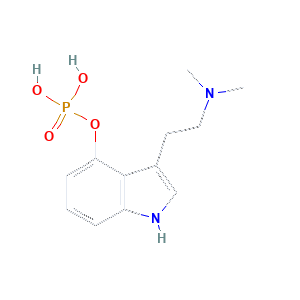
Psilocybin
CID 10624
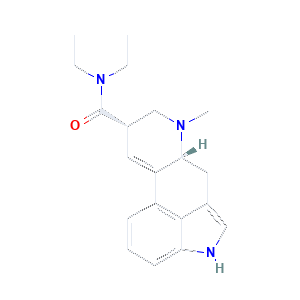
LSD
CID 5761
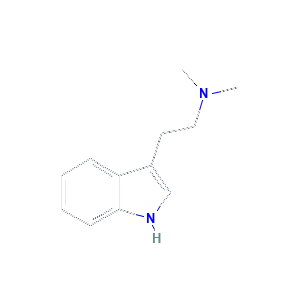
DMT
CID 6089
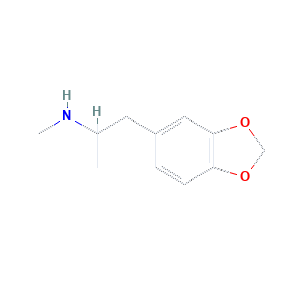
MDMA
CID 1615
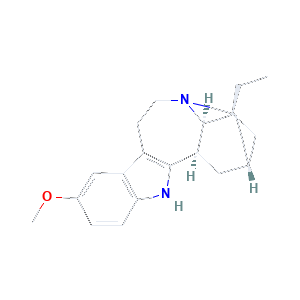
Ibogaine
CID 197060
"The first principle is that you must not fool yourself"
Richard P. Feynman, Cargo Cult Science
How we read it
Every claim tiered. Every source cited. Every license shown, or marked unknown.
claims tiered
13
claims tiered
works cited
10
works cited
venues
8
venues
Where the evidence stops
From molecule to clinic, link by link.
Psilocybin beside two shorter-acting candidates. Each link is a quoted result, a statement with no measurement, or a gap. Pick who was studied to see where that kind of evidence appears.
Who was studied
Key: publishedpublished
Key: statedstated
Key: missingmissing
Key: not applicablenot applicable
MoleculeExposureShort-term benefitMonths laterCare and safety
Psilocybin (reference)
GH001, inhaled 5-MeO-DMT
SPL026, IV DMT
Stress-tested, in public
Psilocybin for depression: what holds under pressure.
The published analysis, re-run and stressed against two thresholds. A row is stable when its whole interval shows more benefit than the threshold, and sensitive when the interval straddles it.
Hedges' g with 95% intervals; negative favours psilocybin. Dashed line: −0.24. Dotted line: −0.50. Solid line: no effect.
Each card’s counts are computed from a synthesis that rescans the citation graph every week; its tiers and readings are editorial judgments. Claims carry their tier, the research programs behind them, and what would change them.
Ask ten studies whether one dose of psilocybin rewires the brain and you get different answers. Read side by side, much of the disagreement lines up with who was dosed, what was measured and which species, though dose, setting and timing differ too.
In healthy volunteers, a single 25 mg dose left enduring functional brain changes “largely absent” one month later, though some diffusion-imaging and network-modularity signals persisted; what lasted was mainly psychological: well-being and insight.
Would change ifA pre-registered, adequately powered study in healthy volunteers finds enduring functional brain change at one month or later. That would move this from preliminary to active debate; an independent replication of the null would move it toward established.
In depression patients given two doses with psychological support, psilocybin increased global brain integration (lower network modularity), and the size of that change tracked the antidepressant response.
Would change ifAn independent research program fails to find increased global integration in depression patients, or finds it without any link to antidepressant response. A second independent replication would move this toward established.
In mice, one dose drives activity-dependent structural rewiring: dendritic-spine remodeling in frontal cortex that strengthens some routes and weakens recurrent cortical loops, and that depends on the drug-evoked neural activity itself.
Would change ifAn independent lab fails to replicate activity-dependent spine remodeling, or shows the rewiring survives silencing of presynaptic input. Either would move the mechanism from preliminary to active debate.
In 15 healthy adults, one dose did not significantly increase synaptic density one week later overall, measured by SV2A PET in frontal cortex and hippocampus. In an exploratory comparison, participants dosed in a therapy-like room showed a greater frontal increase than those dosed in an MRI scanner; the hippocampal difference was smaller, with an interval that included zero.
Would change ifA larger or independently replicated PET study finding a significant overall increase in synaptic density after one dose would move the human question to active debate. A preregistered test of the setting effect would show whether the subgroup difference holds.
We write a commissioned review for one compound and indication: every claim tiered and sourced, the same trust panel and method as our public syntheses, and updates when a new scan changes the picture.
Coverage measured against the citation graph around your question
Independence counted by research program, so one lab’s ten papers count once
What would change the conclusion, stated for every load-bearing claim
A weekly scan and a versioned change log when the literature moves
Biotech BD and clinical teamsPsychedelic-focused fundsClinic operatorsResearch groups
Evidence intelligence for decisions. Not medical advice.